
The year 2026 marks a significant transition for global construction productivity and industrialization. The building industry needs to adopt new construction methods because current methods face increasing pressure from industry leaders. The labor shortages that affect all major markets make it harder to maintain traditional manual work methods. The project costs increase while the project timelines become stricter, which forces companies to seek faster solutions. The world requires sustainable building methods that use standardized systems to decrease their environmental impact. The main question emerges from the existing factors that explain why top contractors use advanced construction systems instead of traditional formwork methods.
Modern construction projects have reached their maximum capabilities with traditional formwork systems. The timber and steel systems require specialized workers whose availability has decreased and whose wages have increased. Manual assembly errors in these traditional methods create structural quality problems that lead to inconsistent results. Timber formwork waste generates excessive material waste while the system operates with very low efficiency throughout its entire life cycle.
The industry is moving toward systemized models to ensure predictable outcomes. We see rapid growth in prefabrication and modular construction across residential and commercial sectors. Project managers at major companies now strive to achieve standardized workflows in all of their essential projects. The formwork system establishes essential structural efficiency foundations in these construction models.
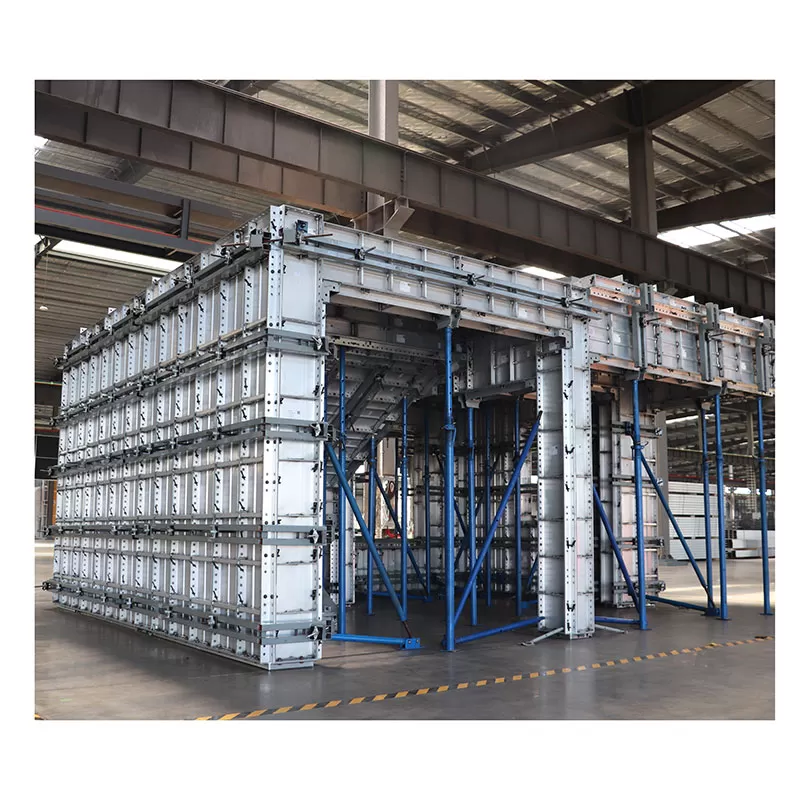
Die-cast aluminum formwork functions as a transitional system that connects traditional construction techniques with complete industrialized building methods. The system provides a flexible solution that functions effectively in both high-rise buildings and large-scale residential construction projects. The system enables contractors to update their construction sites through modern technology without needing to implement complete off-site production processes.
A major technological leap has occurred as manufacturing moves from simple extrusion to precision die-casting. Precision molding offers much higher accuracy compared to traditional assembled systems. This process improves dimensional accuracy across thousands of panels. It also significantly reduces tolerance errors during the concrete pouring stage.
Aluminum offers a high strength-to-weight ratio that makes it easy for workers to handle without heavy cranes. The system enables monolithic casting, where walls and slabs are poured at the same time. This creates an enhanced surface finish that reduces the need for expensive plastering later.
The long-term value of aluminum is found in its reusability. High-quality panels can sustain 100 to over 300 uses with proper care. This durability leads to much lower repair and maintenance costs over time. When analyzed over multiple projects, aluminum has a lower total cost of ownership than traditional systems.
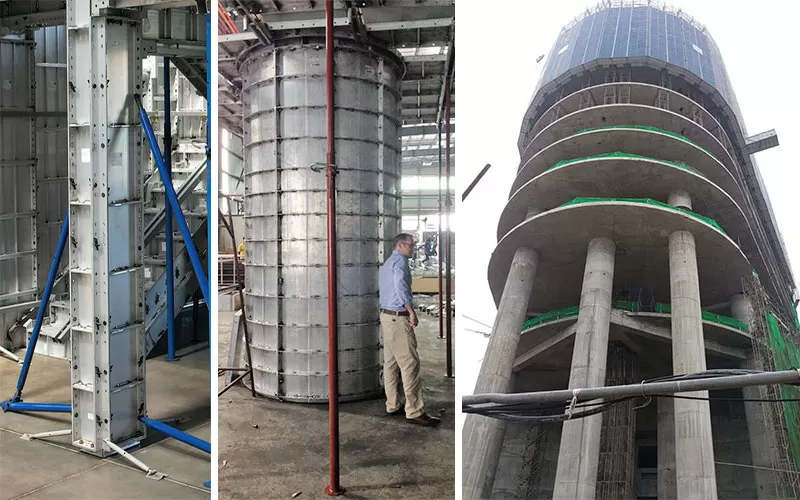
In 2026, construction speed determines market success. Aluminum systems enable faster floor cycle times, typically ranging from 4 to 7 days per level. Because the system is intuitive, it reduces dependency on highly skilled specialized labor. This allows for parallel workflow optimization, where different trades can move into lower floors while the upper structure is still rising.
Contractors are shifting their focus from the lowest upfront cost to stable budgeting. A predictable system reduces the high risk of project delays. It also results in fewer rework expenses because the precision of the mold ensures the concrete is right the first time.
Environmental regulations now mandate greener practices. Aluminum systems significantly reduce timber consumption and lower overall construction waste. This alignment with green building standards like LEED helps firms meet strict ESG targets.
Governments worldwide are pushing for affordable housing and rapid urban infrastructure. Aluminum formwork enables mass replication with consistent quality, which is perfect for these large-scale housing initiatives.
The Asia-Pacific region shows the strongest adoption rates, particularly in India, Southeast Asia, and China. Large government-backed housing programs are the primary drivers of this demand.
Middle Eastern developers focus their efforts on constructing high-rise buildings and mixed-use developments. International investors require developers to provide exceptional quality surface finishes and complete projects within short timeframes.
Emerging markets are completely bypassing traditional timber-based construction systems. They are moving directly to industrialized construction solutions to meet urgent infrastructure needs.
Western markets concentrate their efforts on reducing carbon emissions while improving operational efficiency for workers. The transition progresses at a slow pace, which maintains its continuous movement because of increasing regulatory requirements.
Aluminum formwork is most effective for projects with repetitive layouts. This includes residential towers, affordable housing developments, hotels, and student dormitories.
The higher upfront investment becomes profitable on medium to large-scale projects. It is also the best choice for projects with very tight deadlines where time is more valuable than initial material costs.
Many believe aluminum is "too expensive," but lifecycle savings prove it is often cheaper in the long run. It is not "only for large projects," as it is highly scalable for mid-size developments. Furthermore, modern systems are supported by engineering and training, making them easy to implement.
In high-rise scenarios, switching to aluminum provides measurable time savings. Contractors see a significant labor reduction and a noticeable improvement in structural quality.
For large housing programs, the benefits include rapid deployment and strict cost control. The ability to standardize units ensures every home meets the same safety levels.
A contractor using the same system across multiple sites achieves a high multi-project ROI. High reusability enables faster business expansion into new markets.
A supplier should provide project-specific formwork design. This includes precise load calculations and layout planning for the site.
Successful implementation requires installation support. Professional workforce training helps reduce the learning curve for local crews.
Contractors need timely delivery and consistent manufacturing quality to stay on schedule.
Every project is unique. Suppliers must adapt systems to unique building designs and local construction standards.
CIEZN TECH offers deep expertise in die-cast aluminum formwork systems. We have proven experience across diverse international markets. Our end-to-end service covers everything from design and manufacturing to delivery and on-site support. We focus on helping our clients reduce project timelines, improve efficiency, and maximize ROI. You can explore our solutions at Aluminium Formwork System.
We expect deeper integration with smart construction technologies. BIM-driven workflows will become the norm for formwork planning. Automation in formwork systems will also increase to further reduce labor needs. Soon, aluminum formwork will be the industry standard rather than a premium option.
We encourage you to request a project assessment today. Our team can help you develop a customized formwork solution for your next development. Please contact CIEZN TECH for a professional consultation and discover the future of construction.
High-quality panels typically sustain between 100 and 300+ uses with proper maintenance.
While it excels in repetitive layouts, it is scalable and can be profitable for mid-size developments.
No, aluminum has a high strength-to-weight ratio, allowing workers to move panels manually without heavy cranes.
It aligns with ESG targets by reducing timber consumption and minimizing on-site construction waste.
Yes, professional suppliers provide project-specific engineering support and design optimization for unique layouts.
Phone: +8613142178560
Email: aluform@ciezn.com
WhatsApp: +8613142178560
Address:No.88, Shuntian Avenue, Xiangyin District, Xiangjiang New District Hunan Province

 EN
EN
 RU
RU
 AR
AR
 ES
ES