
In today’s international construction market, contractors are forced to build faster without compromising quality, safety, or cost control. Project timelines are tighter, labor costs keep rising, and developers want more predictable delivery, too. With all this going on, most builders end up asking the same basic thing: can aluminium formwork really deliver a 4-day floor cycle?
The short answer is yes—but only under the right project conditions.
A 4-day floor cycle is not “automatic” from aluminium formwork alone. It relies on a bunch of factors working together: standardized building design, good planning, trained crews, dependable accessories, concrete strength control, and disciplined site execution. For high-rise residential buildings with repetitive layouts, aluminium formwork can support a 4-day cycle. In some well optimized projects, it even becomes a major reason for schedule acceleration, and also helps cost efficiency.
This article will go through what a 4-day floor cycle really means, when it can realistically be achieved, what kinds of resources are required, how it stacks up against 5-, 6-, and 7-day cycles, and what a typical standard-floor construction schedule looks like.
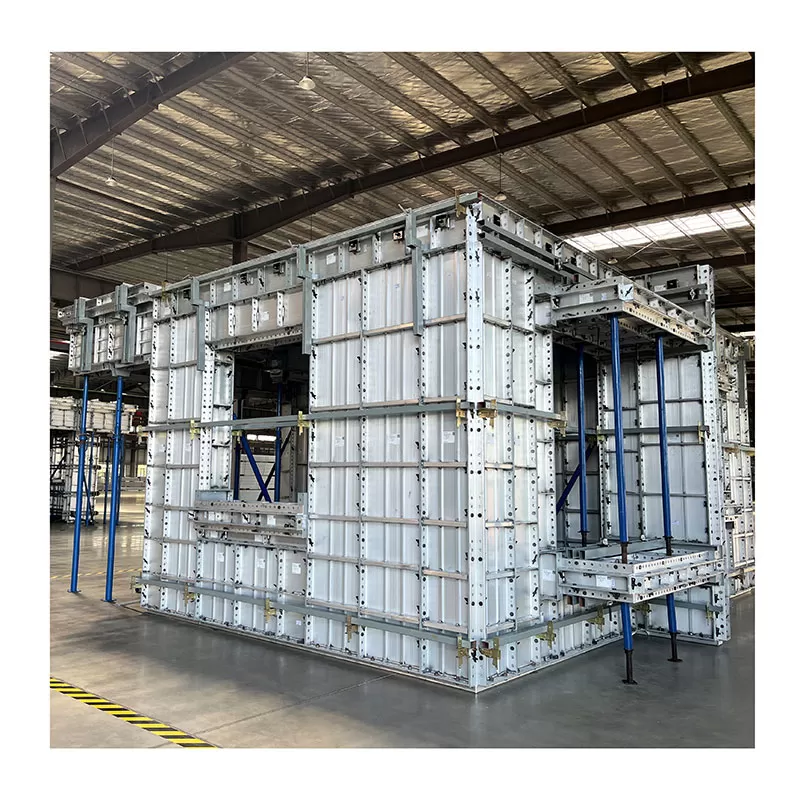
A 4-day floor cycle means that one typical structural floor—usually including walls, columns, slabs, and associated formwork stripping and resetting activities—is completed every four days in a repeating sequence.
In practical terms, this requires the project team to maintain a continuous rhythm of:
This is most suitable for high-rise residential towers, apartment blocks, and other buildings with repetitive standard floors. In such projects, the repetition of unit layouts allows aluminium panels to be reused with minimal modification, which is one of the main reasons the system can support fast cycles.
This is the most important point: a 4-day cycle is possible only when several critical conditions are met at the same time.
A 4-day cycle works best when:
If the project includes frequent plan changes, many transfer floors, complex façades, or non-standard structural details, the cycle usually slows down.
Using isolated components from different systems often causes delays. A fast cycle requires an integrated package including:
The design must match the project structure, crane logistics, and stripping sequence.
Without proper concrete strength development, a 4-day cycle cannot be sustained. The project must have:
If concrete does not reach the required stripping strength on time, the entire cycle is delayed.
Even the best formwork cannot deliver speed with untrained crews. To achieve a 4-day cycle, workers must be familiar with:
A stable team is critical. High labor turnover often destroys the rhythm required for a 4-day cycle.
A 4-day floor cycle is not only a formwork issue. It requires coordination between:
If one trade is delayed, the whole cycle slows down.
A 4-day cycle is most realistic for:
It is less realistic for:
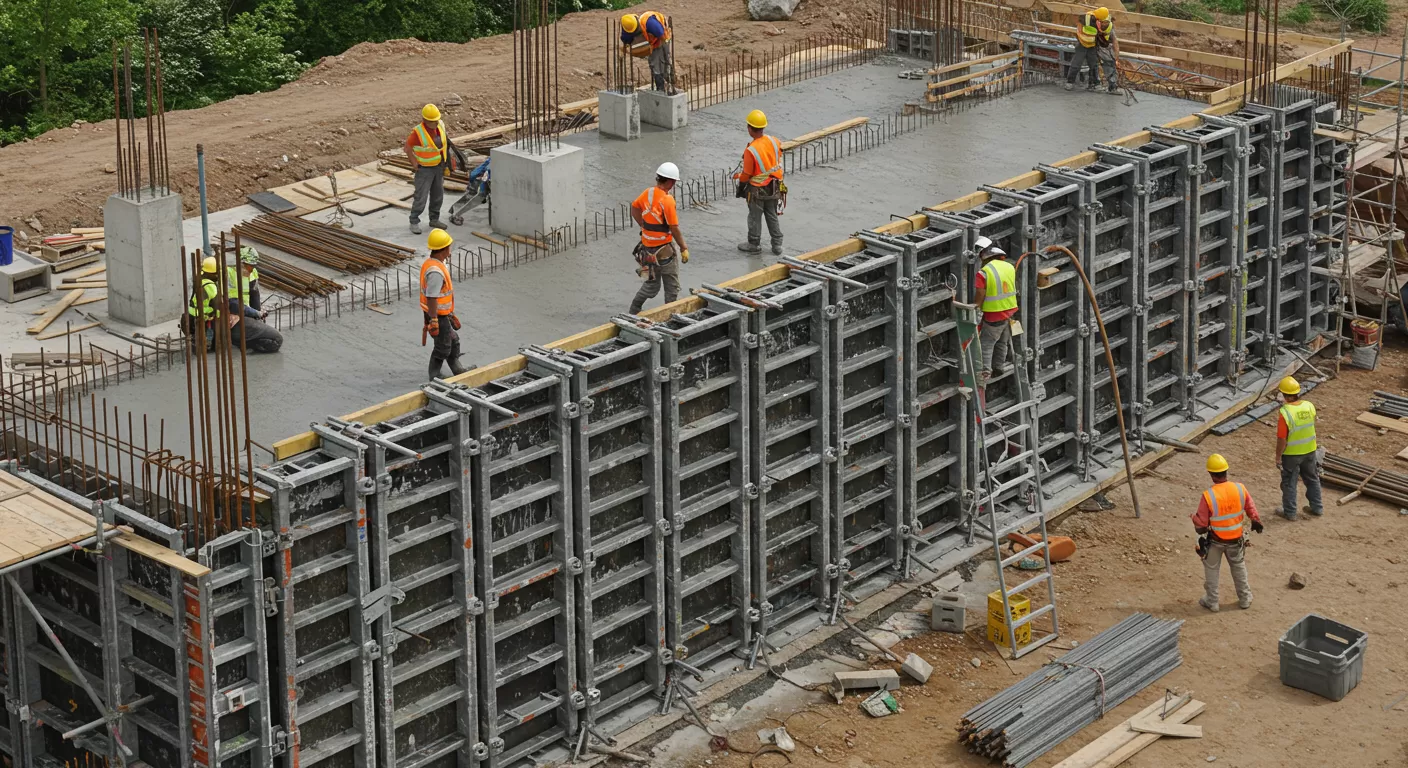
To achieve a 4-day cycle, the project must be organized around manpower, machinery, and materials rather than formwork alone.
A typical standard-floor cycle requires a stable and clearly divided team. The exact number varies by floor area and local labor productivity, but a typical arrangement may include:
For fast-cycle projects, the most important manpower principles are:
A trained aluminium formwork crew usually performs much better than a larger but untrained labor team.
Although aluminium formwork reduces dependence on heavy lifting compared with steel systems, fast-cycle construction still requires proper equipment support, such as:
Equipment does not need to be excessive, but it must be reliable and properly scheduled. Delays in crane allocation or concrete supply can immediately break a 4-day cycle.
The required materials extend beyond the main panels. A workable 4-day cycle depends on:
Shortages in accessories often create more delay than shortages in major panels. For this reason, complete system supply is essential.
This causes wall deviation, poor alignment, and time-consuming correction work.
Incorrect prop spacing or poor support planning can lead to deformation, safety risk, and delayed stripping.
Premature stripping may damage concrete, while delayed stripping slows the next cycle.
This can lead to honeycombing, cracks, and surface defects that require repair.
If reinforcement, embedded items, and formwork teams do not work to the same rhythm, the planned cycle becomes impossible.
Repeated changes to wall openings, MEP embeds, or structural details reduce the efficiency of standardized panels.
| Floor Cycle | Typical Project Condition | Resource Requirement | Schedule Performance | Management Difficulty |
|---|---|---|---|---|
| 4 Days | Highly repetitive high-rise residential floors | High | Excellent | Very High |
| 5 Days | Repetitive projects with good coordination | Medium to High | Very Good | High |
| 6 Days | Average residential or mixed-use towers | Medium | Good | Moderate |
| 7 Days | Conventional projects or early-stage teams | Basic to Medium | Acceptable | Lower |
Best for mature teams, highly standardized structures, and projects with strong planning and execution. This cycle delivers the greatest schedule advantage but also requires the highest coordination discipline.
Often the most practical target for many high-rise projects. It still offers strong schedule performance while being easier to sustain than a 4-day rhythm.
Suitable for projects with moderate complexity, less experienced crews, or less optimized logistics. It is often used during the early learning period before cycle reduction.
Common in conventional formwork practice or in projects where standardization is low. It can be acceptable but does not fully unlock the efficiency value of aluminium formwork.
Below is a typical example of a standard floor cycle plan for a repetitive residential tower. Actual schedules vary by design, concrete specification, labor productivity, and local site conditions.
| Day | Main Work Scope | Key Focus |
|---|---|---|
| Day 1 | Set out lines, install wall and column formwork, start reinforcement and embedded items | Accuracy of positioning and interface coordination |
| Day 2 | Complete wall/column reinforcement, close wall formwork, install slab formwork and props | Fast assembly and alignment control |
| Day 3 | Complete slab reinforcement, embedded items, inspections, and concrete pouring | Inspection quality, pour sequence, vibration, curing |
| Day 4 | Early stripping of designated components, reshoring, cleaning, transferring panels to next floor, start next cycle preparation | Concrete strength confirmation, safe stripping, rapid reset |
This plan works only when the project adopts:
For many projects, a 5- or 6-day cycle is more realistic during the early phase.
Compared with these cycles, the 4-day cycle compresses multiple activities through better planning, stronger crew familiarity, and more disciplined overlap between trades.
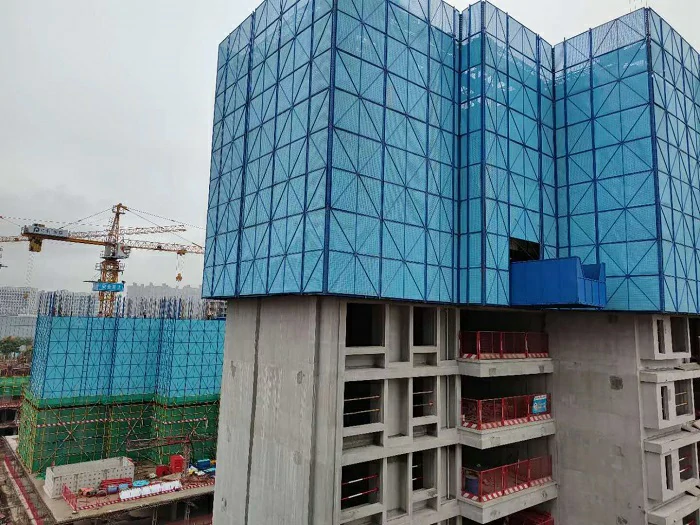
No. Aluminium formwork improves construction speed, but not every project should pursue a 4-day target.
A 4-day cycle is suitable when:
A 4-day cycle may not be suitable when:
In such cases, a 5-day or 6-day cycle may produce better overall results because it is more stable and easier to maintain.
Shorter floor cycles help reduce overall project duration and improve turnover efficiency.
A standardized system reduces repeated manual cutting and adjustment.
More precise panels and stable support improve finish consistency.
Accurate alignment and repeatable workflow reduce downstream corrections.
With proper maintenance, many aluminium systems can achieve 200–300 reuse cycles, improving long-term cost efficiency.
This is why aluminium formwork is not only a speed solution, but also a quality and cost-control solution.
Yes—aluminium formwork can achieve a 4-day floor cycle, but it’s not like it just happens by default. It depends on the project setup, the sequencing, and how well everything is kept tight.
It tends to work best on high-rise residential jobs and other repetitive, standard-floor type work where the builder already has:
For some projects, 4 days is very doable. For others, pushing for 4 might be less sensible, and a 5 day or even 6 day cycle can be the better, more sustainable target overall.
The real advantage of aluminium formwork is not only chasing the fastest possible rhythm, but it’s also about creating a repeatable building method that keeps speed in line with quality, safety, and cost efficiency too.
If your project is deciding whether a 4-day floor cycle is feasible, the smart move is to review the building type, how much the floors repeat, the crew capability, and the resource planning before you lock in the goal. In the right situation, aluminium formwork can be a solid tool for accelerating delivery and improving project performance across the board.
[Contact us to get the most suitable construction schedule plan]
Phone: +8618711321769
Email: alame.vicky@gmail.com
WhatsApp: +8615400055585
Address:No.88, Shuntian Avenue, Xiangyin District, Xiangjiang New District Hunan Province

 EN
EN
 RU
RU
 AR
AR
 ES
ES