
Aluminum formwork is widely used in high-rise residential buildings, commercial complexes, and repetitive concrete structures because of its light weight, high precision, and fast turnover. However, on real construction sites, many formwork problems do not come from the aluminum panels themselves.
In many cases, failures are caused by poor-quality, mismatched, missing, or incorrectly installed accessories.
When pins, wedges, ties, braces, supports, waler, and locking components fail to work properly, the whole system may lose accuracy during concrete pouring. The results can include slurry leakage, wall misalignment, panel displacement, loose connections, unstable support, and costly rework after stripping.
This article focuses on common aluminum formwork failures caused by poor accessories and explains how these problems appear on site, why they happen, and what consequences they bring to construction quality and project cost.
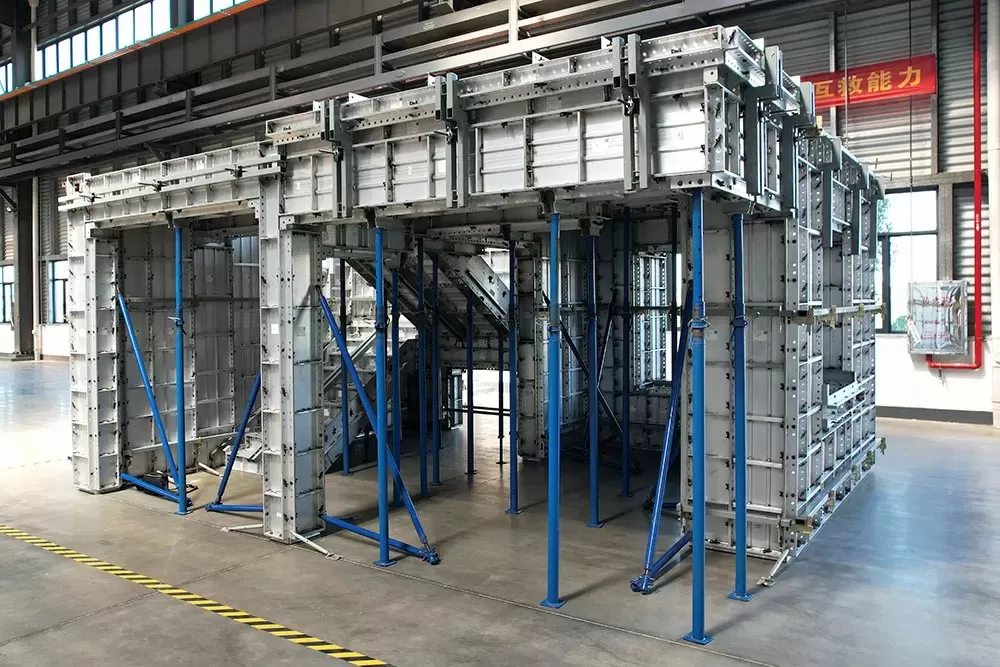
Aluminum formwork panels are usually designed and manufactured with strict dimensional accuracy. They can perform well over many reuse cycles when properly connected, supported, and maintained.
But during concrete pouring, the formwork system is not just holding shape. It is resisting lateral pressure, vibration, worker movement, slab loads, and repeated assembly forces. If accessories are weak, worn, incompatible, or missing, these forces cannot be transferred correctly through the system.
This is why some projects use high-quality panels but still face poor concrete finish, dimensional deviation, or slow construction cycles.
Common accessory-related causes include:
These issues may look minor before concrete is placed, but once pouring starts, they can quickly develop into visible construction failures.
One of the most common failures caused by poor accessories is slurry leakage.
Slurry leakage usually appears at panel joints, waler, wall bottoms, beam-wall connections, or areas where panels are not tightly locked. During vibration and pouring, cement paste escapes through small gaps, leaving honeycombing, rough edges, weak surface finish, and additional repair work after stripping.
Slurry leakage is often caused by:
When connection accessories cannot pull panels together firmly, even a small gap may expand under concrete pressure. Once concrete vibration begins, slurry leakage becomes more serious.
Slurry leakage may lead to:
For projects requiring fair-faced concrete or high-quality wall finishes, leakage can directly affect acceptance standards.
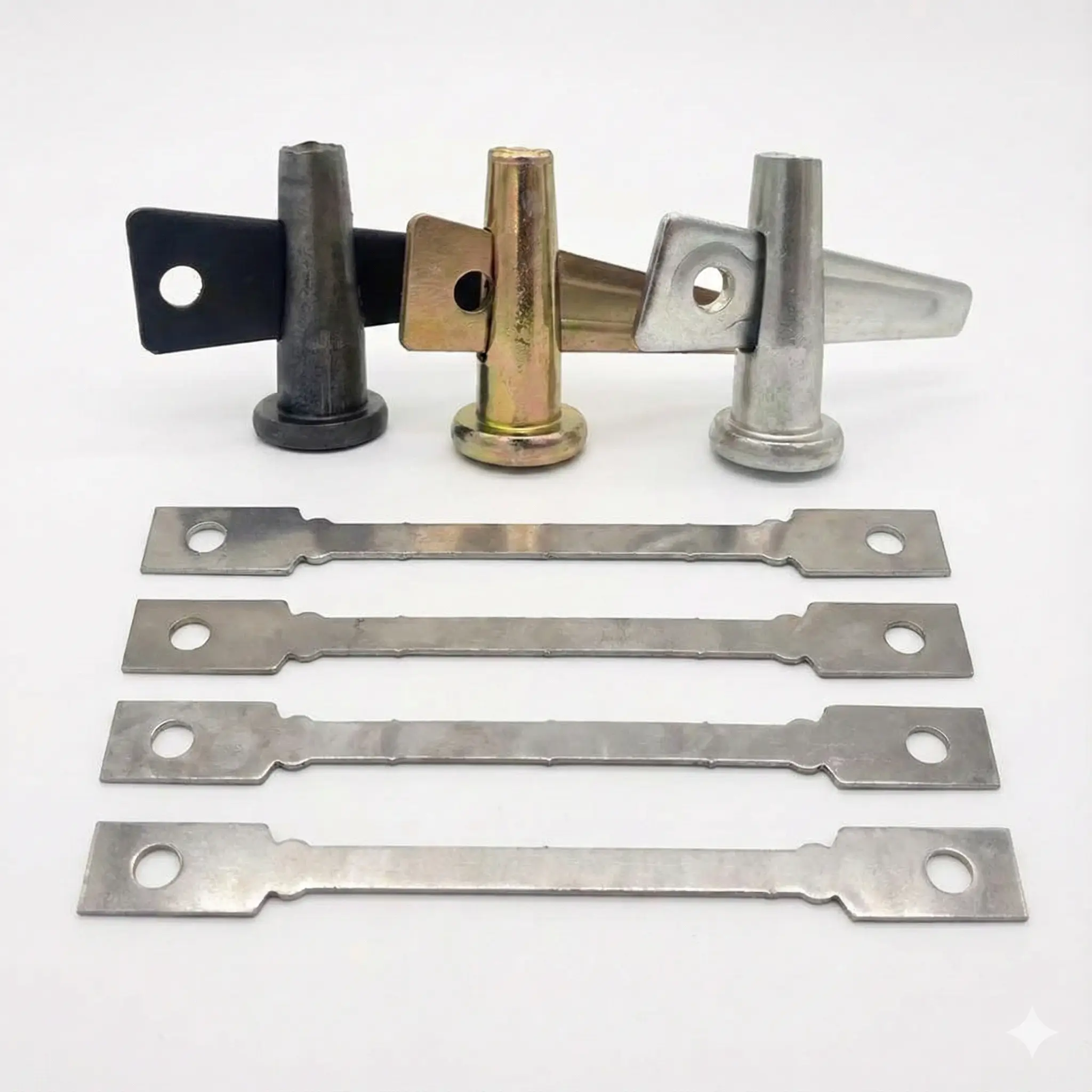
Another frequent failure is misalignment, also known as panel offset or concrete surface stepping.
This happens when adjacent panels do not remain on the same plane during pouring. After stripping, the wall surface may show visible steps, uneven joints, or dimensional differences. Even if the structure is safe, the surface often requires grinding, patching, or correction.
Panel offset is commonly related to:
If accessories cannot hold panels in a unified plane, panels may shift slightly under concrete pressure. This small movement is often difficult to notice before pouring but becomes obvious after stripping.
Panel misalignment can cause:
In repetitive housing projects, repeated offset problems can accumulate into significant finishing costs.
Wall deviation is more serious than simple surface offset. It means the wall position or vertical alignment shifts beyond the required tolerance.
In high-rise buildings, even small vertical deviations can create problems for later installation of doors, windows, facade systems, interior partitions, MEP works, and finishing trades.
Wall deviation may be caused by:
If the formwork is not held plumb and stable, concrete pressure can gradually push the wall form out of position. This is especially common in tall walls, shear walls, core walls, and areas with heavy concrete pressure.
Wall deviation may result in:
Unlike surface defects, wall deviation may affect more than appearance. It can influence the entire project sequence after concrete work.
Loose connections are a major warning sign during aluminum formwork construction.
Before pouring, the formwork may appear stable. But during vibration and continuous concrete pressure, weak accessories can loosen gradually. Once this happens, panels may move, joints may open, and deformation may occur quickly.
Connection loosening often comes from:
Accessories are exposed to repeated hammering, tightening, stripping, and transport. If worn components are not replaced in time, their locking performance becomes unreliable.
Loose connections can lead to:
In severe cases, workers may have to stop pouring and add temporary supports or clamps, which delays the pour and increases labor cost.
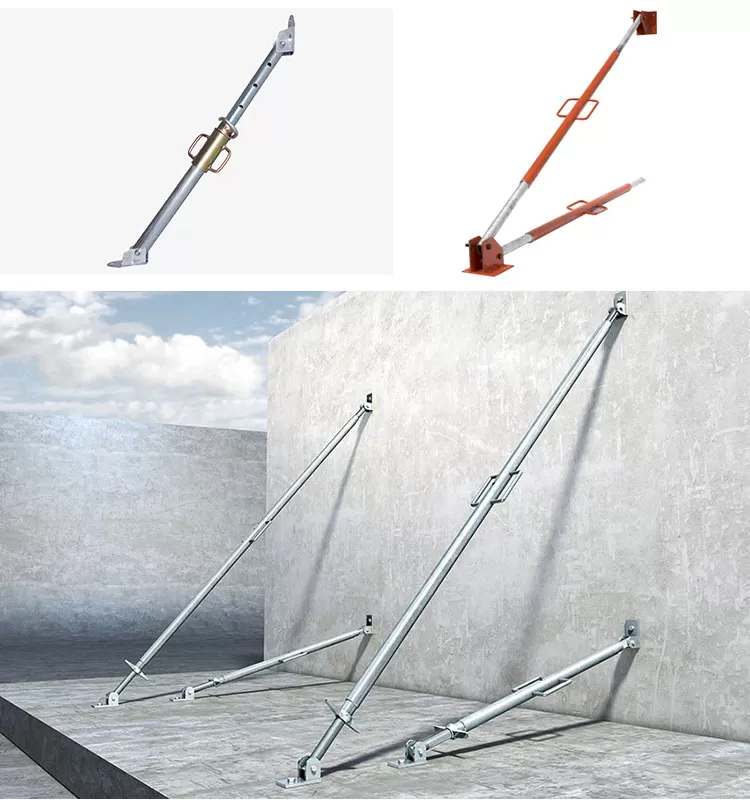
Support instability is one of the most dangerous accessory-related failures.
Aluminum formwork systems depend on props, braces, support heads, brackets, and other support components to hold loads safely. If these accessories are weak, incorrectly installed, or poorly matched, the system may become unstable during installation or concrete pouring.
Support instability can be caused by:
Support problems are especially critical in slab formwork, beam areas, high walls, and cantilevered sections.
Support instability may cause:
Even when no collapse occurs, unstable support can reduce concrete accuracy and increase corrective work after stripping.
On one high-rise residential project, the contractor used aluminum formwork panels from one supplier but purchased part of the accessories locally to reduce initial cost. At the beginning of installation, the system appeared usable, and workers were able to complete assembly.
However, during concrete pouring, several problems appeared at the same time.
At wall joint positions, slurry began leaking from panel gaps. Some wedges did not lock tightly because their dimensions were not fully compatible with the original panels. In several corner areas, the connection was not firm enough, causing small openings under vibration.
After stripping, the site team found three main problems:
The contractor had to arrange additional workers for grinding, patching, and surface repair. Some areas also required dimensional checking before the next floor cycle could start. As a result, the next installation cycle was delayed, and the labor cost for repair increased.
The root cause was not panel quality. The problem came from mismatched and worn accessories that failed to maintain joint tightness and alignment during pouring.
This case shows that accessory problems often do not create one single defect. They can cause a chain reaction: loose connection leads to leakage, leakage exposes joint movement, joint movement causes offset, and offset creates rework.
Poor accessories may seem like a small saving at the procurement stage, but they often create higher cost during construction.
The cost impact usually appears in several ways:
For contractors, the real cost is not only the accessory purchase price. It is the total cost caused by rework, schedule delay, labor waste, and reduced formwork turnover efficiency.
To prevent accessory-related failures, contractors should inspect critical connection and support points before concrete placement.
Important checks include:
A short inspection before pouring can prevent much larger rework after stripping.
Accessory replacement is also important for preventing repeated failures.
Accessories should be replaced when they show the following conditions:
Continuing to use damaged accessories increases the risk of leakage, offset, wall deviation, and support instability.
Aluminum formwork failures are not always caused by the panels. On a lot of construction sites, the usual issues like slurry leakage, panel offset, wall deviation, loose connections, and even support instability are often directly tied to poor accessories or accessories that were not really suited for the project. These kinds of failures then show up as visible quality defects, they add rework, slow down the whole construction cycle, and lower the total value of the formwork system.
For contractors, developers, and formwork subcontractors, the best way is to treat accessories as part of the system performance control. Before pouring, workers should check every single connection, tie, brace, support, and locking component carefully. If something is damaged or doesn’t match, it should be swapped out in time.
When the accessory setup is well-matched and dependable, aluminum formwork can keep its precision and stability, while also protecting its reuse value over many repeated building cycles.
Common failures include slurry leakage, panel offset, wall deviation, loose connections, support instability, wall thickness variation, and concrete surface defects.
Slurry leakage usually happens when panel joints are not tightly locked. Worn pins, loose wedges, missing walers, or incorrect tie spacing can create gaps during pouring.
Wall offset is often caused by loose connectors, deformed wedges, mismatched accessories, or weak locking at panel joints. Under concrete pressure, panels may shift slightly and leave visible steps after stripping.
Yes. Weak braces, incorrect tie systems, loose nuts, or unstable supports can allow the wall formwork to move out of position during concrete pouring.
Contractors should inspect all pins, wedges, ties, braces, supports, and walers before pouring. Damaged, worn, or mismatched accessories should be replaced immediately.
They can be risky if their dimensions, material strength, or locking performance do not match the original aluminum formwork system. Incompatible accessories may cause leakage, misalignment, and support problems.
Accessories should be replaced when they are bent, cracked, loose, corroded, worn, difficult to lock, or unable to maintain accurate connection and support.
Phone: +8618711321769
Email: alame.vicky@gmail.com
WhatsApp: +8615400055585
Address:No.88, Shuntian Avenue, Xiangyin District, Xiangjiang New District Hunan Province

 EN
EN
 RU
RU
 AR
AR
 ES
ES