
The global construction industry is under increasing pressure to build faster, cut down material waste, improve site efficiency, and also meet tougher sustainability requirements. Traditional timber and steel formwork systems still show up in a lot of markets, but they often end up bumping into limitations in reuse cycles, excess generation of waste, messy site cleanliness, and weaker long-term environmental performance.
Aluminum formwork is starting to get more recognition as an industrialized construction method that supports construction efficiency as well as green building goals. Aluminum formwork prevents contractors from viewing formwork as a short-life consumable and instead positions it as a reusable, recyclable, and precision-engineered formwork system that can be applied across repeated concrete pours and multiple stages of a project.
For developers, contractors, and formwork suppliers, the environmental value of aluminum formwork is not just about being “eco-friendly”. It’s tied to measurable advantages like high reuse cycles, reduced timber consumption, lower construction waste, a recyclable material value, and better jobsite management that stays cleaner overall, compared with older approaches.
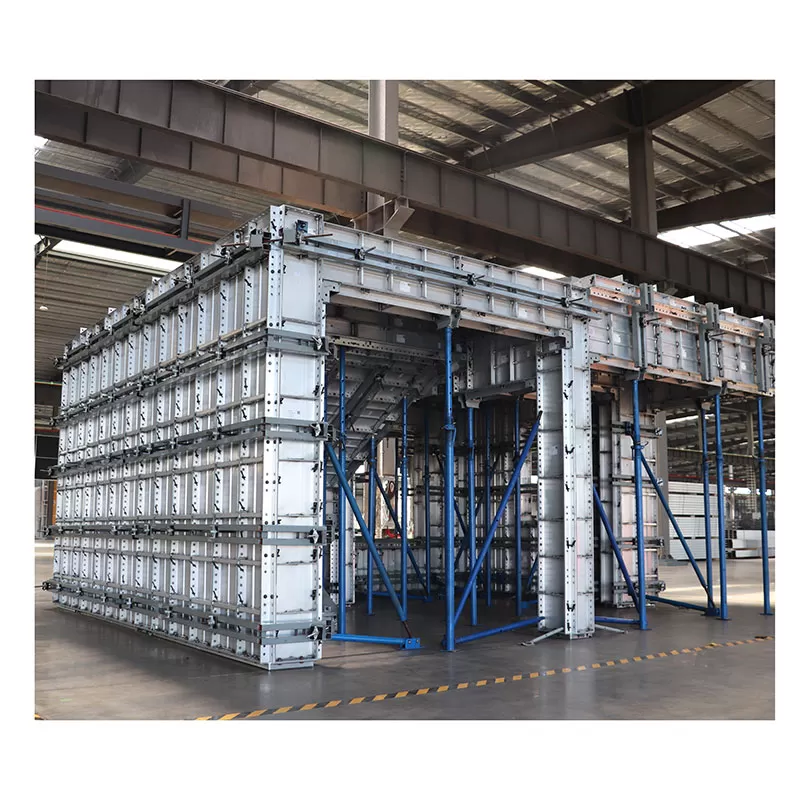
Aluminum formwork is basically a modular system used for cast-in-place concrete work. It can shape walls, slabs, columns, beams, stair runs, openings, and other structural elements using a standardized panel system, and keeps everything more consistent.
A typical aluminum formwork system includes:
This modular approach tends to speed up the assembly, keeps the alignment pretty accurate, and allows the same components to be used again and again across similar floor patterns. For tall residential towers, apartment projects, public housing, and standardized commercial structures, aluminum formwork can improve on-site productivity while also aligning with green construction targets.
And unlike disposable formwork or materials with short service life, aluminum formwork is made more like a long-term construction asset. With proper cleaning, maintenance, storage, and accessory management under control, the aluminum panels can often be reused around 200–300 times. Some higher-quality systems, under more controlled site conditions, can even push beyond that reuse cycle, depending on how the project is handled.
One of the most important green building advantages of aluminum formwork is its high reusability.
Traditional timber or plywood formwork may only be reused a limited number of times before it becomes damaged by moisture, cutting, nailing, deformation, or concrete residue. In many projects, timber-based formwork may require frequent replacement, creating continuous material demand and generating waste after each construction phase.
By contrast, aluminum formwork panels are manufactured from high-strength aluminum alloy and are designed for repeated turnover. A well-maintained aluminum formwork system can normally support:
| Formwork Type | Typical Reuse Performance | Sustainability Impact |
|---|---|---|
| Timber / plywood formwork | Often limited reuse depending on site condition | Higher wood consumption and more waste |
| Steel formwork | Reusable but heavier and may require rust treatment | Durable but less convenient for fast-cycle housing |
| Aluminum formwork | About 200–300 uses with proper maintenance | Lower material replacement frequency and reduced waste |
The higher the reuse cycle, the lower the material consumption per concrete pour. This makes aluminum formwork especially suitable for projects with repetitive layouts, such as residential towers, hotels, dormitories, affordable housing, and large-scale apartment developments.
A big environmental issue in conventional building is the huge amount of timber and plywood that is used during formwork work. Timber formwork is straightforward to cut and fit, but it is also prone to water absorption, swelling, breakage, and general surface harm. After it no longer satisfies either dimensional needs or surface requirements, it tends to be thrown away.
Aluminum formwork helps lower the reliance on timber formwork in several practical ways:
For buildings that have many repeated floors, a single aluminum formwork set can swap out a substantial quantity of timber or plywood, which otherwise would get consumed across several construction cycles. This becomes extra beneficial in places where sustainable building rules push for less timber use and better material efficiency.
Another important sustainability advantage is that aluminum is recyclable.
Aluminum formwork does not become valueless waste at the end of its service life. Even after many reuse cycles, damaged or retired aluminum panels can be collected, sorted, and recycled as aluminum material. This gives aluminum formwork a stronger circular economy value compared with many disposable formwork materials.
Key recycling benefits include:
All this recyclability backs green building approaches that emphasize material circularity, waste reduction, and durable resource efficiency.
Construction waste is one of the main environmental challenges in building projects. Traditional formwork can generate waste from cutting, broken boards, offcuts, damaged plywood, packaging, and repeated replacement materials.
Aluminum formwork helps reduce site waste because most components are prefabricated and used repeatedly. Panels arrive as engineered modules rather than raw material that must be cut and modified extensively on site.
The waste-reduction benefits include:
Because aluminum panels are precision-manufactured, they can also reduce concrete leakage and improve concrete surface quality. A smoother concrete finish may reduce the use of plaster, mortar, repair materials, and finishing labor, further supporting lower material waste.
Instead of describing aluminum formwork as “zero waste,” it is more accurate to say that it can significantly reduce formwork-related construction waste when properly designed, installed, cleaned, and reused.
Green construction is not only about material selection. It also includes cleaner site organization, safer handling, and more efficient construction processes.
Aluminum formwork supports cleaner site management because the system is modular, reusable, and easier to organize than large volumes of cut timber. Panels, accessories, props, and supports can be classified, stacked, reused, and transferred between floors or projects.
Compared with traditional timber formwork, aluminum formwork can help reduce:
A cleaner jobsite improves safety, reduces obstruction, and supports more predictable construction management. This is particularly important for high-density urban projects where material storage space is limited.
Aluminum formwork is also valued for fast installation and dismantling. Its modular interlocking design allows workers to assemble and strip panels quickly once they are trained.
In many repetitive building projects, aluminum formwork can shorten construction cycles compared with conventional timber formwork. Some projects may achieve floor cycles of around 4–5 days per floor, depending on building design, crew experience, logistics, and concrete curing conditions.
Faster construction cycles can indirectly support greener site operations by reducing:
However, speed should be understood as a project-specific benefit. The strongest environmental value still comes from reuse, reduced timber consumption, recyclable material, and waste reduction.
Aluminum formwork systems are typically produced with precision machining and standardized panel dimensions. When correctly installed, they can produce smooth concrete surfaces with good dimensional accuracy.
This can reduce the need for extensive plastering, grinding, and surface correction. In some project conditions, plastering work may be reduced or partly eliminated, depending on finishing standards and local construction requirements.
The environmental benefits include:
This is another way aluminum formwork contributes to green building performance: by improving first-time concrete quality and reducing the need for corrective materials.
Aluminum formwork is especially suitable for projects where sustainability, repeatability, speed, and material efficiency are important.
Common green construction application scenarios include:
High-rise apartments and residential towers often have repeated floor plans. Aluminum formwork can be reused floor after floor, making it suitable for projects that require high turnover and consistent concrete quality.
Large-scale housing programs usually require standardized layouts and fast delivery. Aluminum formwork helps reduce timber use, control construction waste, and maintain repeatable quality across many units.
These buildings often use repetitive room modules. Aluminum formwork can improve reuse efficiency and reduce material waste in repeated structural zones.
In dense city environments, construction sites have limited storage space and stricter waste-control requirements. Modular aluminum formwork helps keep the site cleaner and more organized.
Projects targeting green building standards such as LEED, BREEAM, EDGE, or local green construction programs may benefit from aluminum formwork’s reusable, recyclable, and waste-reducing characteristics.
For developers building multiple similar phases, aluminum formwork can be transferred from one phase to another. Panel reuse across projects improves resource efficiency and reduces the need for repeated temporary material procurement.
For contractors and developers, ESG performance is becoming more important in project bidding, financing, and brand evaluation. Aluminum formwork can support ESG and sustainable construction goals through practical site-level improvements.
Its main contributions include:
These advantages make aluminum formwork a practical tool for contractors who need to improve environmental performance without sacrificing construction speed or structural quality.
CIEZN provides complete aluminum formwork solutions for residential, commercial, basement, wall, column, slab, and customized concrete construction applications. The system includes aluminum panels, props, ties, connectors, accessories, support components, and engineering assistance.
CIEZN’s aluminum formwork systems are designed to support:
By combining engineered design, modular manufacturing, and complete system supply, CIEZN helps contractors adopt more efficient and sustainable construction methods for modern green building projects.
Aluminum formwork contributes to green building not simply because it is described as sustainable, but because its advantages can be measured in practical construction terms.
With proper maintenance, aluminum panels can generally be reused 200–300 times, reducing the need for repeated timber or plywood formwork. Its modular design reduces on-site cutting waste, improves site cleanliness, and helps lower formwork-related construction waste. At the end of its service life, aluminum can be recycled, supporting circular material use.
For high-rise residential buildings, public housing, hotels, dormitories, urban projects, and green-certified developments, aluminum formwork provides a practical path toward faster, cleaner, and more resource-efficient concrete construction.
As green building standards continue to rise, reusable and recyclable formwork systems will become increasingly important for contractors who want to reduce waste, improve site performance, and support sustainable construction goals.
With proper cleaning, maintenance, storage, and handling, aluminum formwork panels can typically be reused 200–300 times. High-quality systems may achieve even more cycles under well-managed site conditions.
Aluminum formwork replaces repeated use of timber or plywood panels. Because aluminum panels can be reused many times, contractors need fewer disposable wood-based formwork materials over the full project cycle.
Yes. Aluminum is recyclable, and retired or damaged aluminum panels can still retain material value. This supports circular construction and helps reduce landfill waste.
Yes. Aluminum formwork reduces waste by limiting timber offcuts, broken plywood, repeated material replacement, and excessive surface repair. Its prefabricated modular design also reduces on-site cutting and material loss.
Yes. It is suitable for high-rise housing, public housing, hotels, dormitories, urban renewal projects, multi-phase developments, and projects targeting green building certifications such as LEED, BREEAM, EDGE, or local green construction standards.
Phone: +8618711321769
Email: alame.vicky@gmail.com
WhatsApp: +8615400055585
Address:No.88, Shuntian Avenue, Xiangyin District, Xiangjiang New District Hunan Province

 EN
EN
 RU
RU
 AR
AR
 ES
ES