
A professional installation of aluminium formwork system will help ensure the creation of a concrete structure of high quality. The good planning of the process allows maintaining the accuracy of measurements, surface quality, and overall stability of the construction. In case installation control is not done professionally, a number of defects like uneven walls, slab positioning issues, leakage, deformations, and additional costs will arise. This way, it becomes obvious that there are a lot of risks to be considered when installing aluminium formwork without control.
For the sake of the installation of aluminium formworks on the construction of skyscrapers, residential buildings, commercial constructions, or other concrete constructions of different scales, it is recommended to use an installation checklist and standardized practices on-site.
This article basically covers practical aluminium formwork installation best practices for construction sites, including pre-installation inspection, careful assembly precautions, checks before the pour, stripping and cleaning steps, plus several common mistakes to avoid.
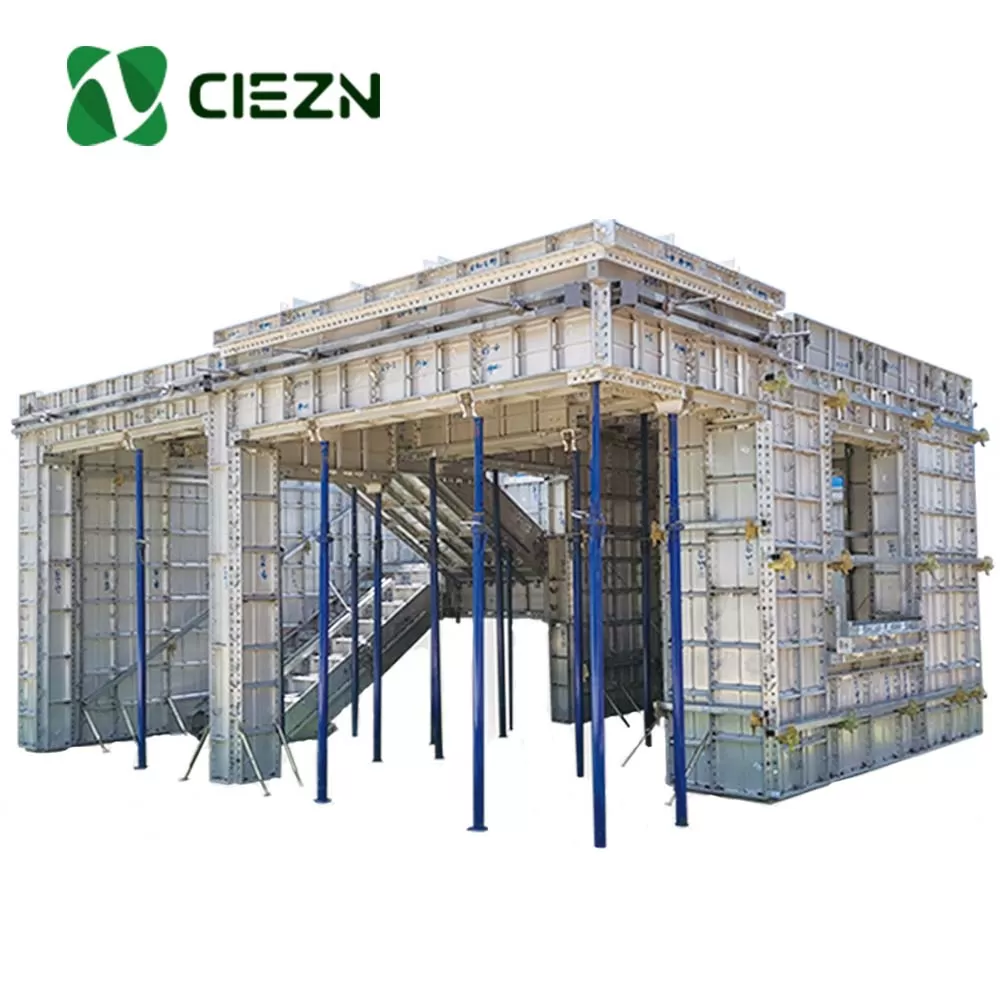
Successful installation starts with a well-prepared site. Proper preparation reduces installation time and prevents repeated adjustment during assembly.
Before placing aluminium formwork panels, site teams should complete the following checks.
Verify that floors, foundations, or working platforms are level before placing formwork panels. Uneven surfaces can compromise wall alignment, slab thickness, and panel connection accuracy.
Recommended checks include:
Workers should understand the approved formwork layout before installation. Incorrect panel sequence may cause delays, gaps, or forced connections.
Before assembly, confirm:
Arrange all panels, props, walers, connectors, pins, wedges, ties, braces, and tools before assembly. This helps crews work efficiently and reduces downtime caused by missing parts during installation.
The preparation should include:
Do not install damaged or incompatible components.
Before installation, check:
Damaged components should be repaired or replaced before installation to avoid leakage, misalignment, or safety issues during pouring.
CIEZN wall, slab, and column formwork systems are modular, making assembly easier when proper steps are followed. The key principle is to install panels in sequence, check alignment continuously, and avoid forcing connections.
Wall formwork installation should follow the approved layout and reference lines.
Recommended steps include:
Wall panels should not be hammered into position with excessive force. If panels cannot connect smoothly, workers should check whether the panel sequence, floor level, or accessories are correct.
For slabs and beams, proper support placement is critical. Load distribution must be checked before pouring to avoid deflection, slab level errors, or uneven concrete surfaces.
Best practices include:
Incorrect support placement may cause excessive deflection during pouring, which can affect slab thickness and surface level.
Column formwork requires precise vertical alignment and tight panel connections.
Before and during column formwork installation:
Column formwork should be inspected carefully before concrete placement because small alignment errors can become obvious after stripping.
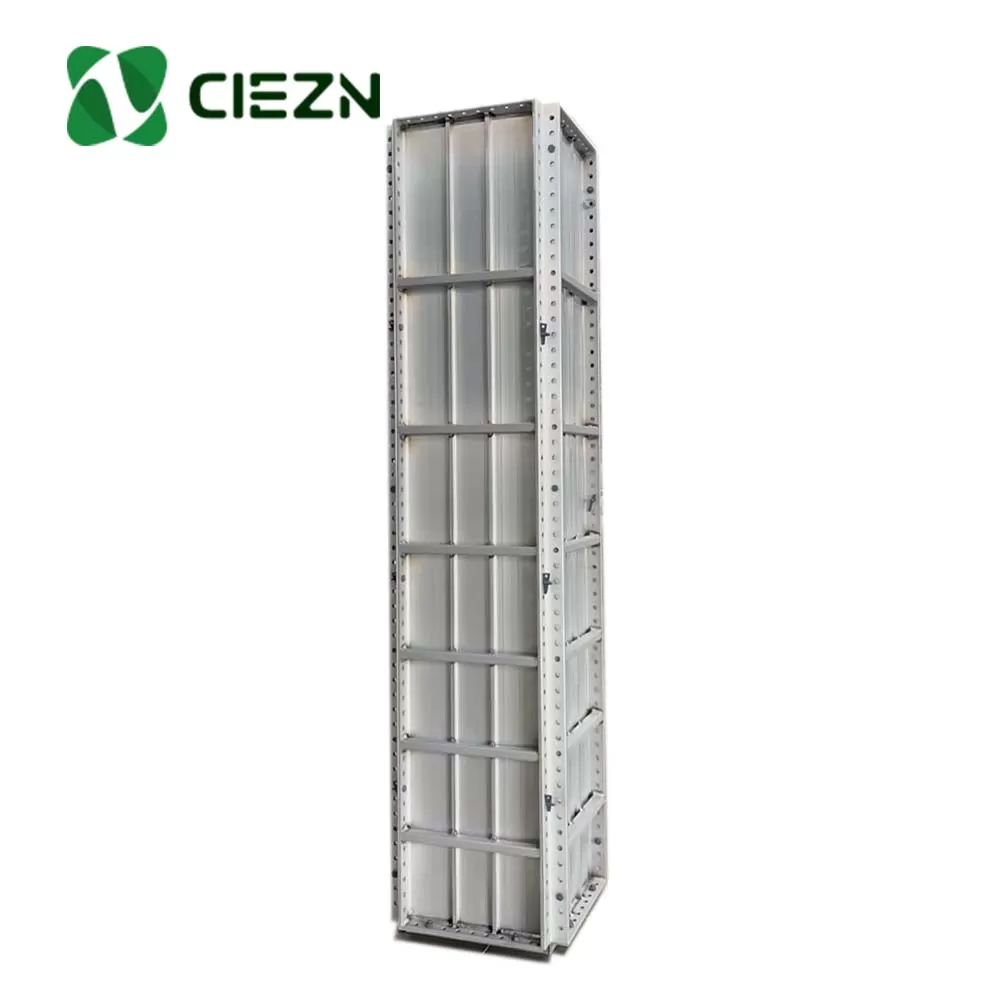
Heavy panels should be lifted using lifting clamps, cranes, or hoists. Workers should avoid manually lifting heavy equipment beyond safe limits, as this increases fatigue and injury risk.
Recommended handling practices include:
Safe handling protects both workers and the formwork system.
The crew can be divided into specialized teams to improve installation efficiency.
A practical arrangement includes:
Parallel task organization reduces waiting time and improves site productivity, especially on repetitive floor layouts.
Before concrete pouring, the entire aluminium formwork system should be reviewed carefully. This step is essential because many defects only appear after concrete pressure is applied.
Check the following items before concrete placement:
Any loose connection can cause gaps, leakage, movement, or misalignment during pouring.
Regularly inspect props, walers, braces, and panel joints during pouring to ensure panels are not shifting under the concrete load.
Site teams should pay attention to:
If abnormal movement is found, pouring should be slowed or stopped, and corrective measures should be taken immediately.
Correct stripping and cleaning help protect aluminium formwork panels and improve reuse cycles.
Remove props and panels according to the approved stripping sequence. In general, panels should be removed only after the concrete reaches the required strength.
Best practices include:
Improper stripping can cause panel bending, surface scratches, edge damage, and reduced service life.
Clean panels immediately after removal to prevent concrete residue from hardening.
Recommended cleaning steps include:
Good cleaning and storage practices help preserve panel shape and accuracy for future projects.
To improve installation quality, site teams should avoid the following common mistakes.
If the base surface is uneven, panel alignment and wall thickness may be affected from the beginning.
Wrong panel sequence can cause gaps, forced connections, missing parts, and installation delays.
Damaged pins, loose wedges, or incompatible local parts may cause leakage, offset, or unsafe connections.
Excessive hammering or forced alignment may deform panel edges, connection holes, or frames.
Wrong prop spacing can lead to slab deflection, beam deformation, or unstable support during pouring.
Many problems such as loose ties, open joints, or unstable b races become serious only after concrete pressure is applied.
Early stripping may damage concrete edges and increase the risk of panel sticking, surface defects, or structural quality issues.
Concrete residue becomes harder to remove over time and may affect the next installation cycle.
CIEZN aluminium formwork offers modular solutions for walls, slabs, columns, basements, and customized concrete structures. The system is designed for fast assembly, accurate dimensions, and stable concrete results.
CIEZN’s aluminium formwork systems support:
Panels can be reused over 200 times if cleaned, handled, and stored properly. With reliable technical support, global shipping, and customized panel design, CIEZN aluminium formwork is suitable for high-rise towers, commercial buildings, residential projects, and large-scale construction sites.
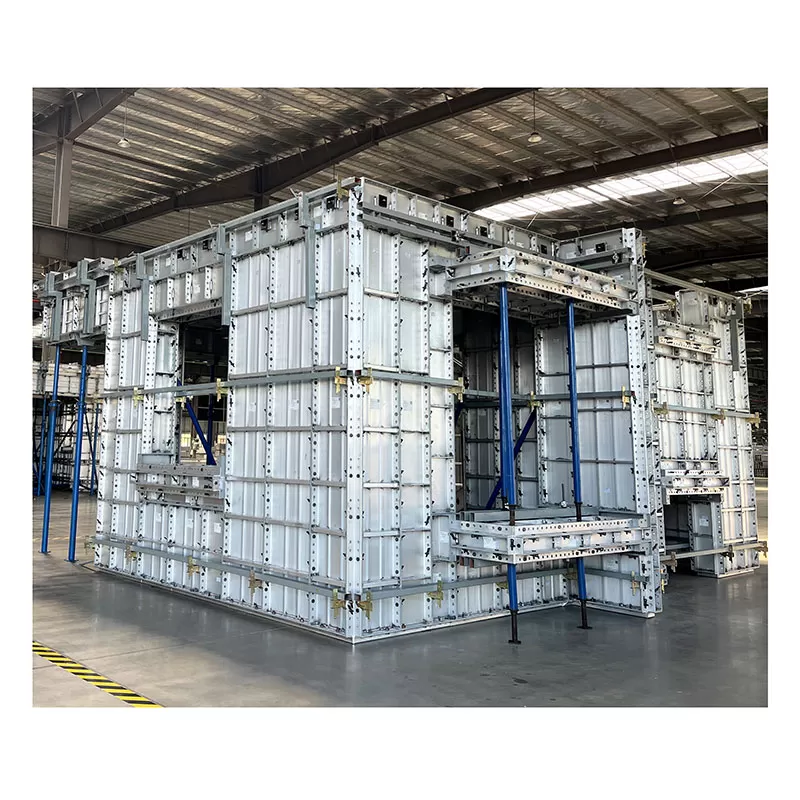
Proper installation is essential for high-quality concrete structures. Construction teams can maximize productivity by following clear site preparation procedures, correct assembly sequence, pre-pour inspection, safe stripping, and immediate cleaning after use.
Changing installation guidance from “tricks” to standardized best practices makes aluminium formwork management more professional and practical for B2B construction projects. By following these best practices, contractors can reduce leakage, misalignment, slab deflection, rework, and safety risks.
Choosing CIEZN aluminium formwork allows contractors to achieve fast installation, precise dimensions, reusable panels, and consistent concrete results. International projects can benefit from modular wall, slab, and column systems that help optimize time, labor, and cost.
Explore the complete CIEZN system here: CIEZN Aluminium Formwork System.
Phone: +8618711321769
Email: alame.vicky@gmail.com
WhatsApp: +8615400055585
Address:No.88, Shuntian Avenue, Xiangyin District, Xiangjiang New District Hunan Province

 EN
EN
 RU
RU
 AR
AR
 ES
ES