
In construction procurement, the cheapest formwork is not always the best bargain in the end. A lot of contractors, developers, and project owners still look at aluminum formwork, steel formwork, and timber formwork mostly through the lens of first purchase price. But the real money shift from a formwork system really comes from the full lifecycle cost, including reuse cycles, labor demand, required equipment, maintenance, the level of finishing quality, waste, salvage value, and—honestly—how fast that first investment starts paying back.
For high-rise projects, residential developments with repeating layouts, and big concrete volumes, this bigger perspective is essential. Sometimes a solution with higher upfront costs can still end up being the lowest total cost of ownership (TCO), and also the best return on investment (ROI) across the life of the project.
This article puts aluminum, steel, and timber formwork side by side from a lifecycle cost perspective, and explains why aluminum formwork is getting chosen more and more by contractors that need quicker cycles, reduced labor spend, tighter quality control, and stronger long-term value.
When buyers evaluate formwork, the first question is often: Which material is cheaper to buy? But this only captures one part of the equation.
A more accurate question is: Which formwork system costs less per use, per floor, per building, and per completed project?
That is why professional procurement teams focus on TCO, not just purchase cost. Formwork cost should be evaluated across the full project cycle:
In projects with repetitive layouts, lifecycle cost differences become even more significant. The more often a formwork system is reused, the more important long-term efficiency becomes.
Aluminum formwork, basically a lightweight modular high-precision system, gets used a lot in high-rise residential buildings, apartment towers, villas, townhouses, hotels, and in all those other repetitive concrete structures. It’s interesting because it brings high strength with low weight, so panel work can often be done by hand, without needing heavy lifting gear.
Its main advantages include:
These features make aluminum formwork especially suitable for projects where speed, quality consistency, and ROI matter.
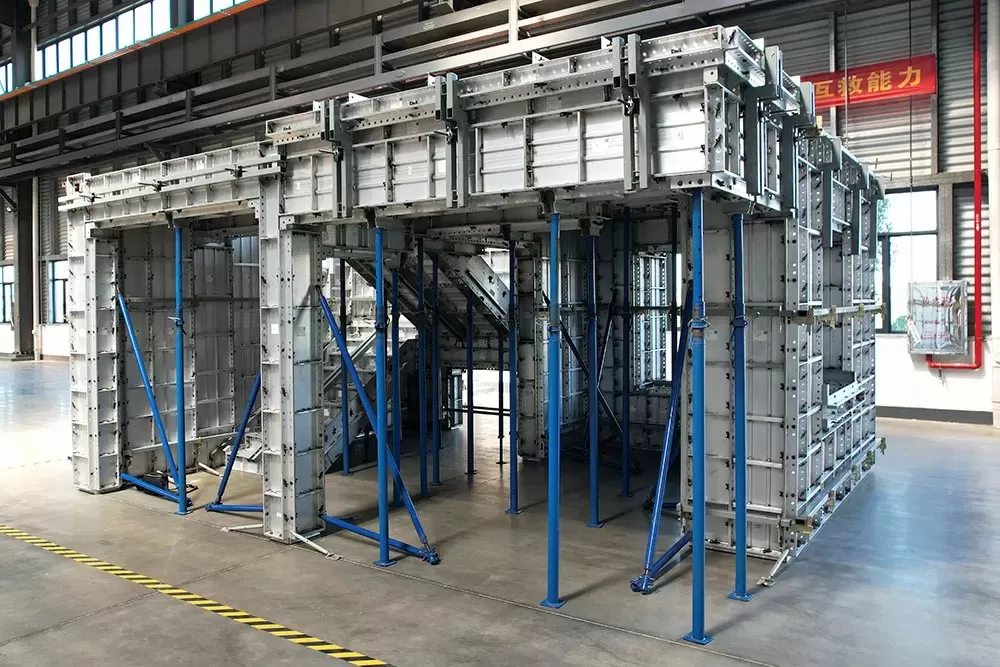
Steel formwork is strong and durable, and it tends to handle many reuse cycles. It also helps deliver a solid concrete finish, and that’s why you see it in infrastructure projects, heavy-duty applications, and in a few specialized concrete works where you really want reliability.
However, steel is much heavier than aluminum. This increases:
Steel can remain a viable choice in some projects, but once equipment cost, slower cycle time, and maintenance are included, its lifecycle economics are often less attractive than aluminum in high-repetition building construction.
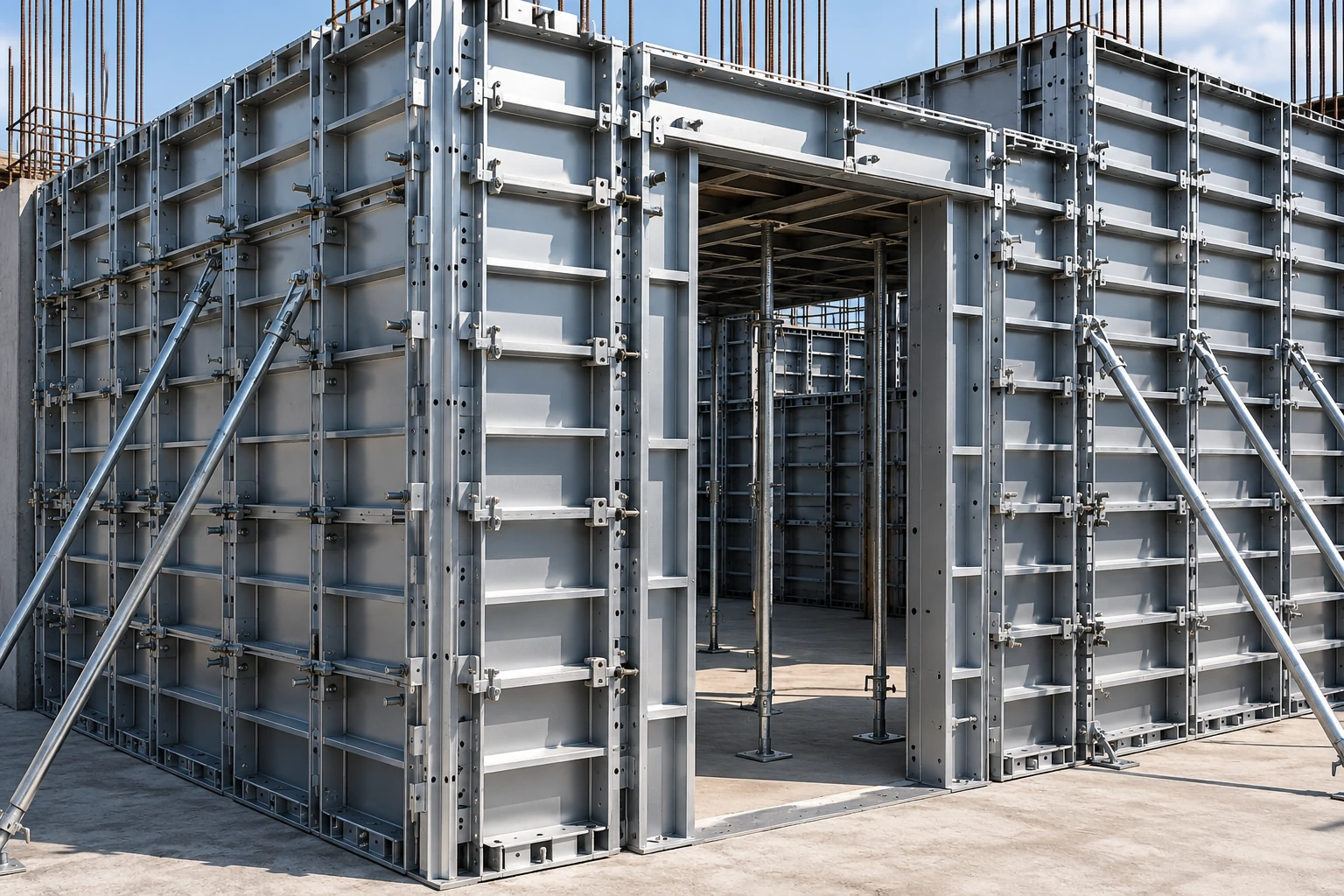
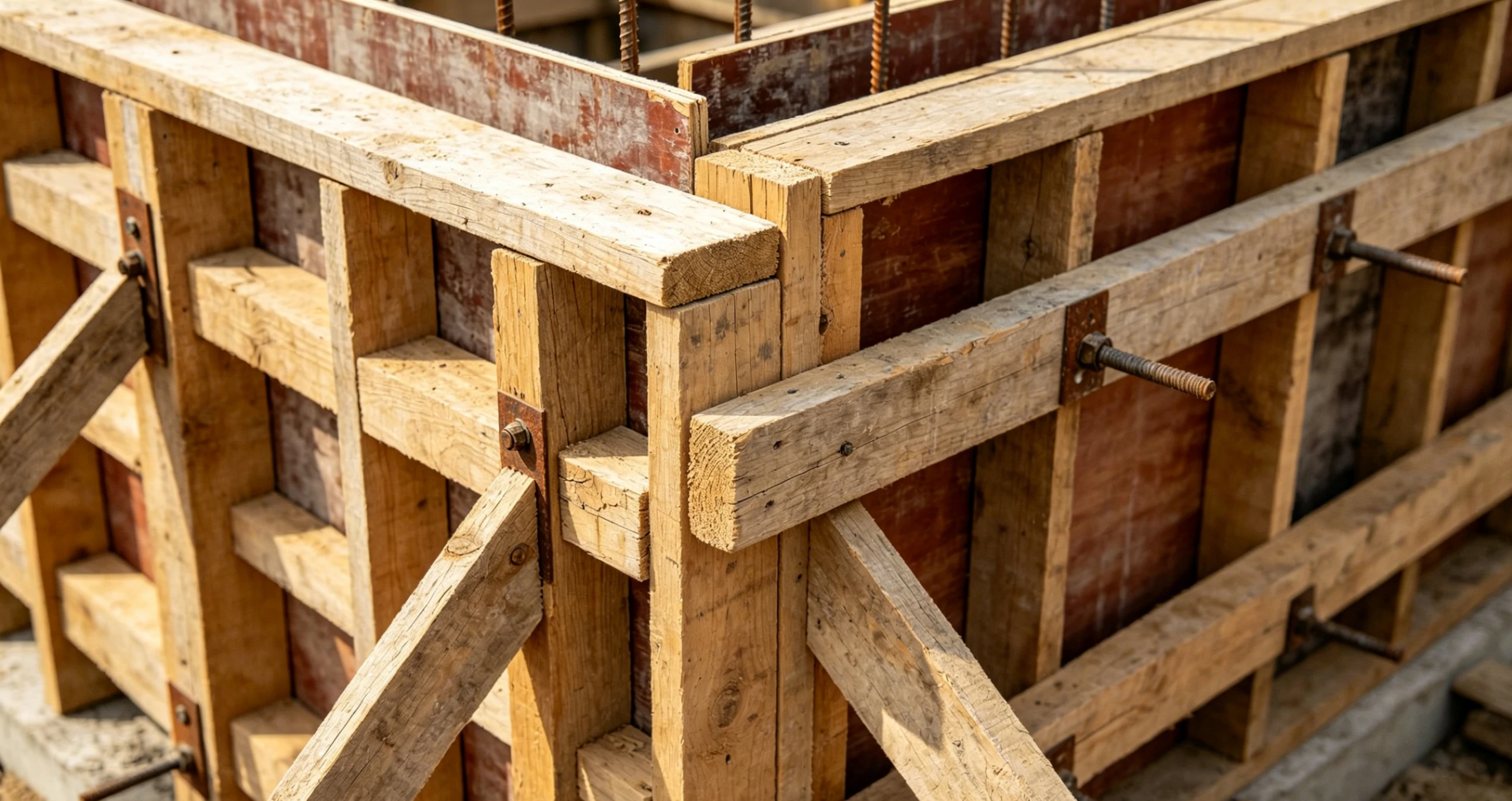
Timber formwork has been used for ages, mostly because the initial cost stays low, and can be cut or adjusted directly on site, pretty easily. It is still common in small projects, irregular structures, and low-budget jobs.
But timber also has the most limitations:
For projects with repeated layouts or tight schedules, timber usually becomes the most expensive option over the full lifecycle.
One of the biggest drivers of lifecycle cost is how many times the formwork can be reused.
| Formwork Type | Typical Reuse Cycles |
|---|---|
| Aluminum Formwork | 200–300 times |
| Steel Formwork | 80–150 times |
| Timber Formwork | 3–10 times |
A plain comparison kind of shows why this matters. Even if aluminum costs more right at the beginning, the expense can be spread over far more pourings. Timber may look cheap during procurement, but since it wears out quite fast, the cost per use ends up getting surprisingly high.
Higher reuse also ups the planning certainty. Contractors can standardize their workflows, cut down on replacement buys, and keep a steady, reliable quality from one cycle to the next, without too much hassle.
Timber still looks appealing if viewed at the starting price, like at first glance. But when the real project situation starts showing up, the weak points become pretty obvious, and not in a small way.
Timber formwork gets affected easily by water, rough treatment, and repeated stripping. In a lot of cases, it can only be used for a few cycles before quality starts slipping.
Timber setups often mean on-site cutting, fitting, nailing, patching, plus a good amount of adjustment. That pushes labor hours upward, and it also creates a kind of uneven result from one area to the next.
Since timber changes shape over time, dimensional control gets less trustworthy. This can lead to uneven surfaces, alignment issues, and more rework in follow-on trade
When concrete is cast using timber, it usually ends up needing more patching, plaster work, or other corrections. Those later costs are often ignored during procurement, and then they turn into a surprise budget item later on.
Timber generates more site waste and replacement demand. Disposal and material loss further increase total cost.
For one-off or very small jobs, timber may still be acceptable. For residential towers, mass housing, and repetitive structures, it is generally the weakest option in lifecycle economics.
Steel formwork is durable, but it is not automatically the most cost-effective system.
Steel panels are difficult to move manually and often require cranes or hoists. This adds equipment scheduling complexity and direct machinery cost.
Because of the handling difficulty, steel usually needs more crew effort during installation and dismantling.
In projects where floor-to-floor speed matters, heavier systems can slow progress. Delays in one cycle affect the entire structure schedule.
Steel is vulnerable to rust if not properly maintained, especially in humid or coastal environments. Cleaning, coating, and repair create additional expense.
Although steel may perform well in some industrial or infrastructure uses, it is often less efficient than aluminum for repetitive wall-slab-column systems in residential construction.
Aluminum formwork gives a pretty solid overall balance between reusability, speed, labor efficiency, surface finish quality, and end-of-life value (residual value).
Aluminum delivers structural performance without the heavy mass of steel. That means easier logistics, faster handling, and less reliance on big lifting machinery.
In repetitive high-rise layouts, aluminum formwork can achieve noticeably shorter floor cycles. Quite a few contractors rely on it to speed up slab, wall, and column sequences and improve how fast the project turns over.
Since panels are machine-fabricated, we can get smooth, consistent concrete faces. In many projects, this reduces or even eliminates the need for plastering, so both labor and material can be saved.
When alignment is tight and the joints are well matched, leakage drops and honeycombing are less, and the overall geometry stays closer to plan. This also helps later trades like MEP runs, tiling, and final finishing work.
With the right care and maintenance, aluminum formwork stays in usable shape for around 200–300 uses. Over time, that shrinks the cost per cycle in a way that’s hard to beat.
When aluminum formwork finally reaches the end of its service, it still retains scrap value and is fully recyclable. This improves net project economics and reduces construction waste.
To compare systems fairly, procurement teams should use a simple TCO framework.
TCO per project=Initial Purchase Cost+Labor Cost+Supporting Equipment Cost+Maintenance/Repair Cost+Finishing/Rework Cost+Waste/Disposal Cost−Residual Value
For repeated use analysis, cost per cycle can be estimated as:
Cost per Use=(Initial Purchase Cost−Residual Value+Total Maintenance Cost)/Total Reuse Cycles+Labor per Cycle+Supporting Equipment per Cycle+Finishing/Rework per Cycle
This model shifts the decision away from “Which one is cheaper to buy?” to “Which one delivers the lowest cost over actual project use?”
If comparison stops here, timber appears cheapest. But this is misleading.
The more repetitive the project, the more aluminum’s higher purchase price is diluted.
For commercial decision-making, TCO should be paired with ROI analysis.
A simple ROI formula is:
ROI=(Total Lifecycle Savings−Additional Initial Investment)/Additional Initial Investment×100%
The additional initial investment of aluminum can be recovered through:
A practical payback formula can be expressed as:
Payback Period=Additional Initial Cost of Aluminum/(Monthly Cost Savings + Monthly Schedule Acceleration Value)
In repetitive residential and high-rise projects, the payback period is often much shorter than buyers expect because aluminum creates savings in multiple cost categories at the same time.
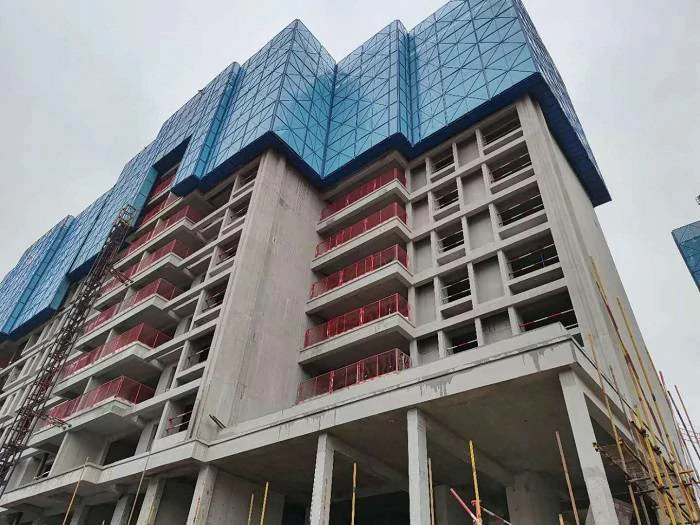
High-rise buildings are one of the strongest use cases for aluminum formwork.
In a high-rise environment, even small time savings per floor can create major financial impact across the whole project. This is why aluminum formwork often outperforms timber and steel in total economic value, even if it does not have the lowest purchase price.
Aluminum formwork is not only for towers. It is also highly effective in:
For residential work, the benefits are especially clear:
Compared with wood and steel, aluminum is particularly well suited to projects where many units share the same layout.
| Factor | Aluminum | Steel | Timber |
|---|---|---|---|
| Initial Purchase Cost | High | Medium | Low |
| Reuse Cycles | Very High | High | Very Low |
| Weight | Light | Heavy | Medium |
| Labor Efficiency | High | Medium-Low | Low |
| Equipment Need | Low | High | Low-Medium |
| Surface Finish | Excellent | Good | Fair |
| Rework Risk | Low | Medium | High |
| Maintenance | Low | Medium | High |
| Waste Generation | Low | Medium | High |
| Residual Value | High | Medium | Low |
| ROI Potential in Repetitive Projects | Very High | Medium | Low |
When comparing aluminum vs steel vs timber formwork, the best procurement decision should be based on full lifecycle cost, not initial price alone.
For developers, contractors, and procurement managers working on high-rise buildings, residential communities, and standardized concrete structures, aluminum formwork is not simply a material choice—it is a financial decision that can improve productivity, shorten payback time, and increase project profitability.
If you are selecting a formwork system for your next project, the right question is no longer “Which one costs less today?” but “Which one creates more value over the life of the project?”
Phone: +8618711321769
Email: alame.vicky@gmail.com
WhatsApp: +8615400055585
Address:No.88, Shuntian Avenue, Xiangyin District, Xiangjiang New District Hunan Province

 EN
EN
 RU
RU
 AR
AR
 ES
ES