
In a slab aluminum formwork system, a Quick-Deck Prop Head is not just a simple U-head accessory. It is the key node that makes “early panel turnover with retained support” possible. Its role is to allow the slab aluminum formwork panels, some joists or middle beams, and other reusable parts to be stripped and turned over after the concrete meets the allowable stripping conditions, while the vertical steel props continue to support the structure until slab strength and the project method statement allow final prop removal.
For the jobsite, a well-used early striking head can improve formwork turnover. Used incorrectly, it can lead to slab deflection, disturbed supports, a confused stripping sequence, or even structural safety risks.
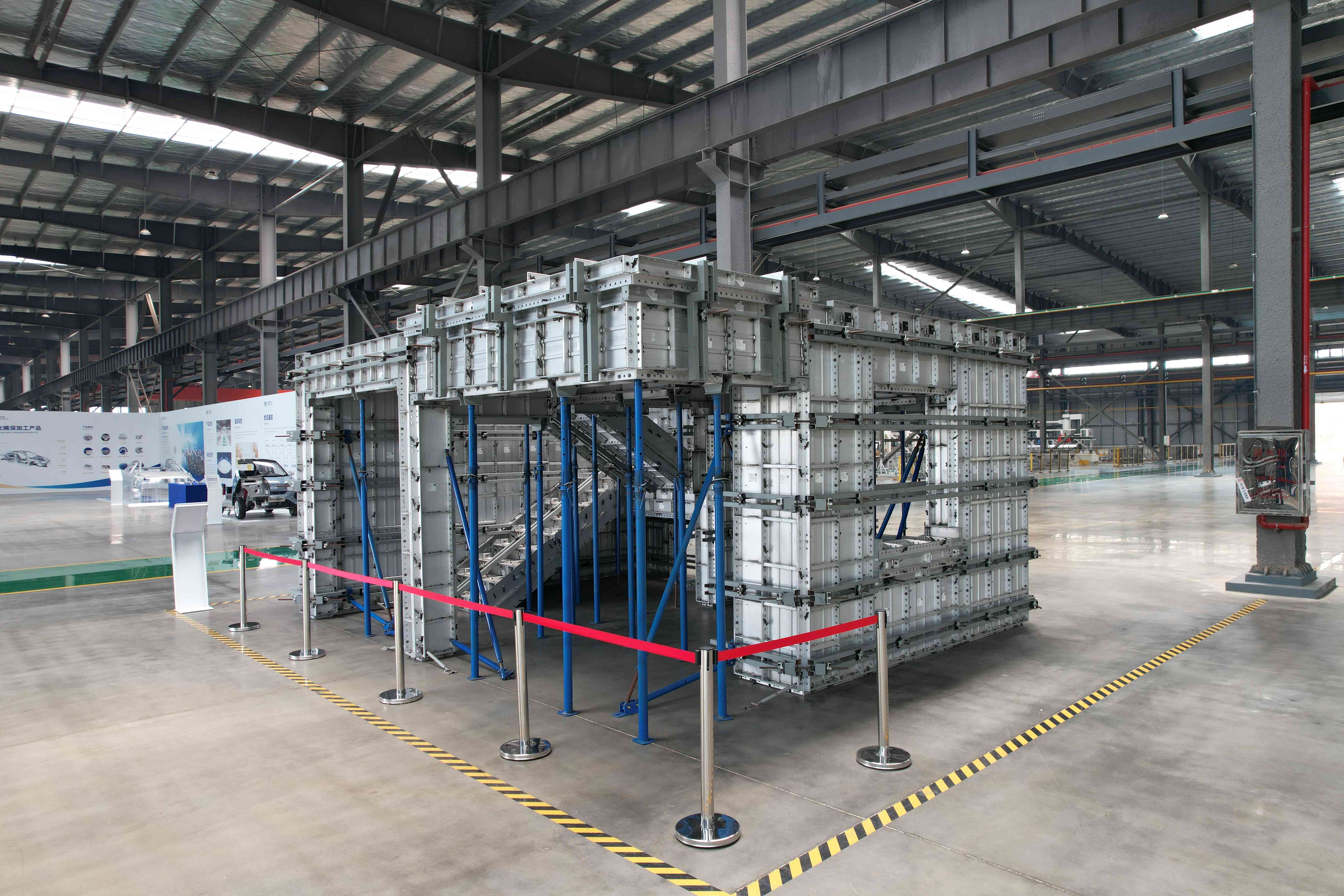
The load path in slab aluminum formwork usually works like this: fresh concrete and construction loads act on the slab panels, then transfer through middle beams, joists, or support beams to the early striking head, and finally through the steel props to the structure below. The Quick-Deck Prop Head sits between the joist or middle beam and the steel prop, so it functions as a transfer node inside the slab shoring system.
Its core value is that it separates “formwork stripping” from “support retention.” In traditional formwork, stripping panels can easily disturb the supports. In an early striking system, however, the slab panels are removed while independent supports remain in place, so the concrete slab still has reliable vertical support before it reaches the required strength.
The most common misunderstanding on site is this: a Quick-Deck Prop Head does not mean the steel props can be removed early. The parts normally removed early are the slab aluminum formwork panels, some middle beams, connectors, and reusable components. The single props, early striking heads, and retained support system that still carry load must remain in place according to the project-specific method statement.
If retained supports are removed before the concrete reaches the required strength, the slab may deflect, crack, or show elevation deviation. In serious cases, structural safety can be affected. The correct understanding is “strip the formwork early, retain the supports,” not “remove the formwork and supports early together.”
| Component | Main function | On-site control focus |
|---|---|---|
| Slab aluminum formwork panels | Form the slab soffit and the concrete finish surface. | Check panel numbering, flush joints, and complete pins and wedges. During stripping, avoid prying damage to the panel frame. |
| Middle Beam / Formwork Joist | Connect and support slab panels, transferring loads to the early striking head and steel props. | Check that components are properly seated. The stripping sequence must not disturb retained supports. |
| Quick-Deck Prop Head / early striking head | Connect the joist or middle beam to the steel prop, allowing the support to remain after slab panels are stripped. | The node must be reliable. It must not be loosened or displaced during formwork stripping. |
| Single Prop / Steel Prop | Provide vertical load-bearing support for the concrete slab. | Keep it vertical, keep the base stable, adjust the height correctly, and do not remove it casually during the retention period. |
| Pins and Wedges | Connect panels, joists, and related components. | Confirm the load condition before removal. Strip in sequence to prevent components from dropping suddenly. |
| Horizontal Steel Rods and Couplers | Improve the overall stability of the support system. | Install according to the method statement. Do not release stability restraints casually during stripping. |
Before slab formwork installation, place the single props and early striking heads according to the detailed design drawings. The early striking head must be located below the designed load-bearing node. It should not be moved casually to avoid pipes, openings, or access routes. If an on-site adjustment is necessary, a technical person should review the load path before any change is made.
Steel props should first be roughly adjusted close to the design height, then fine-adjusted with the adjusting nut or U-head. The top of the early striking head should contact the middle beam or slab formwork component reliably. The lower prop should be basically vertical, and the base must not be suspended, tilted, or sitting on loose debris.
When installing middle beams, joists, and slab aluminum formwork panels, make sure each component is seated correctly and all pins and wedges are complete. Panel joints, beam edges, opening edges, and corners need special checking, because loose local connections can cause grout leakage, misalignment, or settlement during concrete placement.
After slab formwork installation is complete, use a level, laser level, or control line to recheck soffit elevation and flatness. Around the early striking head, pay particular attention to whether the support is tight. There should be no “false bearing,” local suspension, or uneven loading between adjacent supports.
Slab early striking should follow this logic: confirm the strength condition first, then remove non-retained components; remove connectors before taking down panels and some joists; and never disturb retained supports. Different projects and local codes may set different requirements for stripping strength, span, structural type, and support retention time. On site, the construction method statement, supervision approval, and local code requirements must take priority.
| Stripping step | Operating point | Risk control |
|---|---|---|
| Confirm stripping conditions | Check the concrete strength report, same-condition test cubes, or project stripping approval requirements. | Do not start early stripping before the conditions are met, especially in long spans, cantilever slabs, and concentrated-load areas. |
| Clear construction loads | Before stripping, remove stacked materials, pump pipes, tools, and unnecessary construction loads from the slab. | Avoid excessive local load on the slab during stripping. |
| Remove non-retained connectors | Remove reusable pins and wedges, connection strips, and local accessories in sequence. | Do not loosen retained supports or early striking heads first. |
| Remove slab panels | Start from a safe working area and strip slab aluminum formwork panels by zones. | Do not pry large areas aggressively. Prevent panels from falling or frame edges from being damaged. |
| Remove removable middle beams / joists | Remove the middle beams or joists that the system design allows to be turned over. | Do not disturb the retained support node above the prop. |
| Recheck retained supports | After panel removal, recheck early striking heads, single props, bases, and plumbness. | Make sure retained supports continue to carry load until final prop-removal conditions are satisfied. |
The support retention stage is the part of the early striking system most easily overlooked. Once the slab panels have been removed, workers may assume the area is finished. In fact, the retained supports are still carrying early-age slab load. Any impact, movement, loosening, or early removal can change the slab’s load condition.
| Wrong practice | Possible consequence | Correct practice |
|---|---|---|
| Thinking the early striking head means “props can be removed early” | Slab deflection, cracks, or structural safety risk. | Strip the formwork early and retain the supports. Final prop removal must meet strength and method statement requirements. |
| Loosening retained supports while removing panels | The support system loses load continuity, and slab load is redistributed. | Keep the stripping sequence away from retained nodes, then recheck immediately after stripping. |
| Changing prop positions casually on site | The load-bearing node shifts, causing abnormal local stress in joists and panels. | Arrange according to shop drawings. Any adjustment must be technically reviewed. |
| Leaving the prop base without firm bearing | Settlement can occur during concrete placement or the retention period. | Clean the base surface and use reliable bearing plates when needed. |
| Stacking materials on the slab after stripping | The early-age slab may be overloaded locally. | Control construction loads and do not concentrate heavy materials in areas that have not met strength conditions. |
When purchasing a slab aluminum formwork system, do not look only at the panel price. Also confirm whether early striking heads, single props, middle beams, connection strips, pins and wedges, horizontal steel rods, couplers, and other matching components are complete. Whether an early striking system works well depends on component compatibility, shop drawing design, numbering management, installation training, and stripping guidance.
CIEZN’s aluminum decking slab formwork system treats slab panels, middle beams, steel props, and early striking heads as one coordinated system configuration, suitable for residential, public building, and high-turnover cast-in-place concrete projects. For overseas projects, confirm the component list, spare-part ratio, installation drawings, stripping sequence instructions, packaging labels, and on-site training materials before shipment, so incomplete accessories do not slow down construction after arrival.
A Quick-Deck Prop Head connects the slab joist or middle beam with the steel prop. Once the required conditions are met, it allows the slab aluminum formwork panels to be stripped and turned over while the support remains in place to carry the slab.
No. The core idea is early formwork stripping with retained support. Whether the steel props can be removed must be determined by concrete strength, span, structural type, the project-specific method statement, and local code requirements.
Yes. After panel stripping, recheck the early striking heads, single props, bases, plumbness, and load condition to confirm that retained supports have not been loosened, displaced, or hit.
Not recommended. The early stripping sequence should follow the aluminum formwork shop drawings, project-specific method statement, and site technical briefing, especially for long spans, cantilever areas, opening edges, and basement zones.
When safety conditions are met, an early striking system allows slab aluminum formwork panels and some components to be turned over earlier, improving formwork utilization and shortening the standard-floor cycle. That efficiency must be built on support retention and strength verification.
The correct use logic for a Quick-Deck Prop Head in slab aluminum formwork is to make formwork turnover efficiency and structural support safety work together. It should not be understood as a tool for removing supports early. It should be treated as a load-transfer node in the slab aluminum formwork system. Only when concrete strength is confirmed, retained supports are clearly defined, the stripping sequence is controlled, and support rechecks are completed can the early striking system deliver high turnover, higher efficiency, and good concrete finish quality.
Phone: +8618711321769
Email: alame.vicky@gmail.com
WhatsApp: +8615400055585
Address:No.88, Shuntian Avenue, Xiangyin District, Xiangjiang New District Hunan Province

 EN
EN
 RU
RU
 AR
AR
 ES
ES